

TRADITIONAL PROCESS.
EACH PIECE IS BEAUTIFULLY HANDMADE, JUST AS IT HAS BEEN FOR GENERATIONS.
We honor traditional Indonesian batik techniques at every stage, from “nyorek” and “nglowong”, where motifs are drawn and defined with hand-applied wax, to “medel”, the patient dyeing process using natural dyes, and “nglorod”, where the wax is gently released.
Produced by local artisans across Java and Bali, each piece reflects time, care, and craftsmanship. Throughout the process, we remain committed to ethical working environments and responsible practices, ensuring batik evolves with respect for people, culture, and the environment.
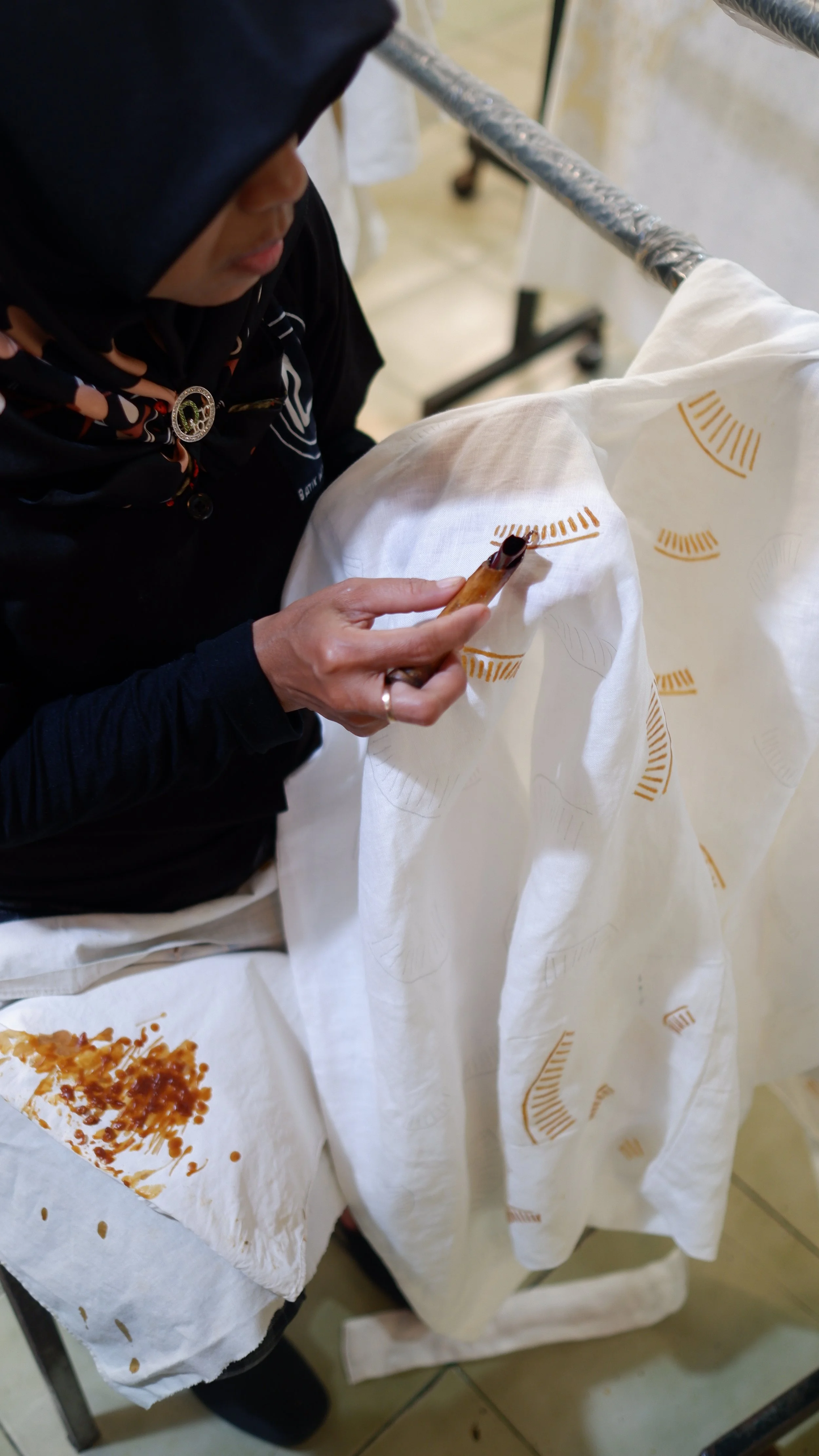
Nglowong marks the beginning of the batik tulis process. At this stage, artisans carefully apply hot wax (malam) onto the fabric using a traditional tool called a canting, following the pre-drawn pattern. This step defines the motif, as the wax acts as a resist, protecting certain areas of the cloth from dye.
NGLOWONG (WAX DRAWING).
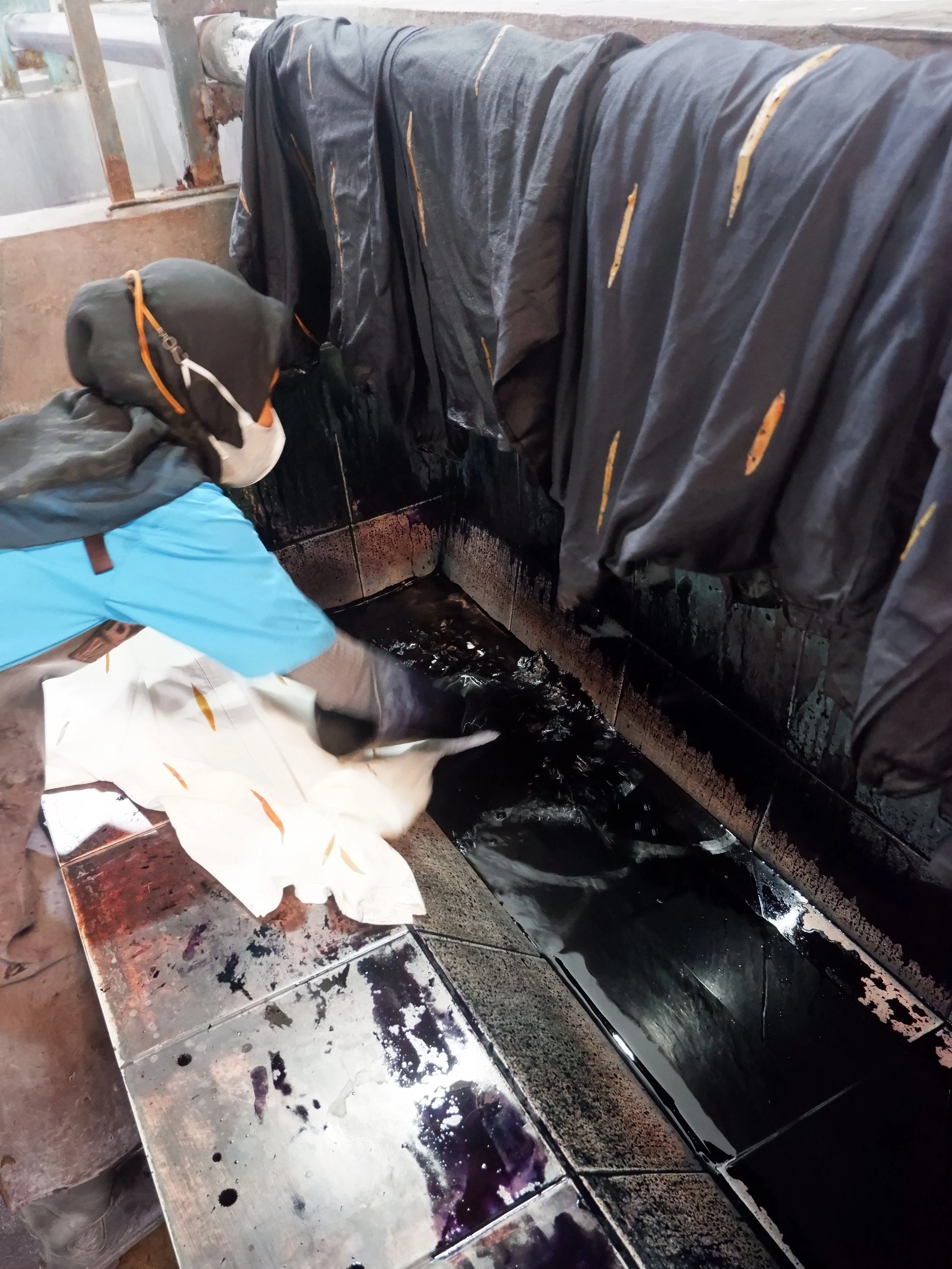
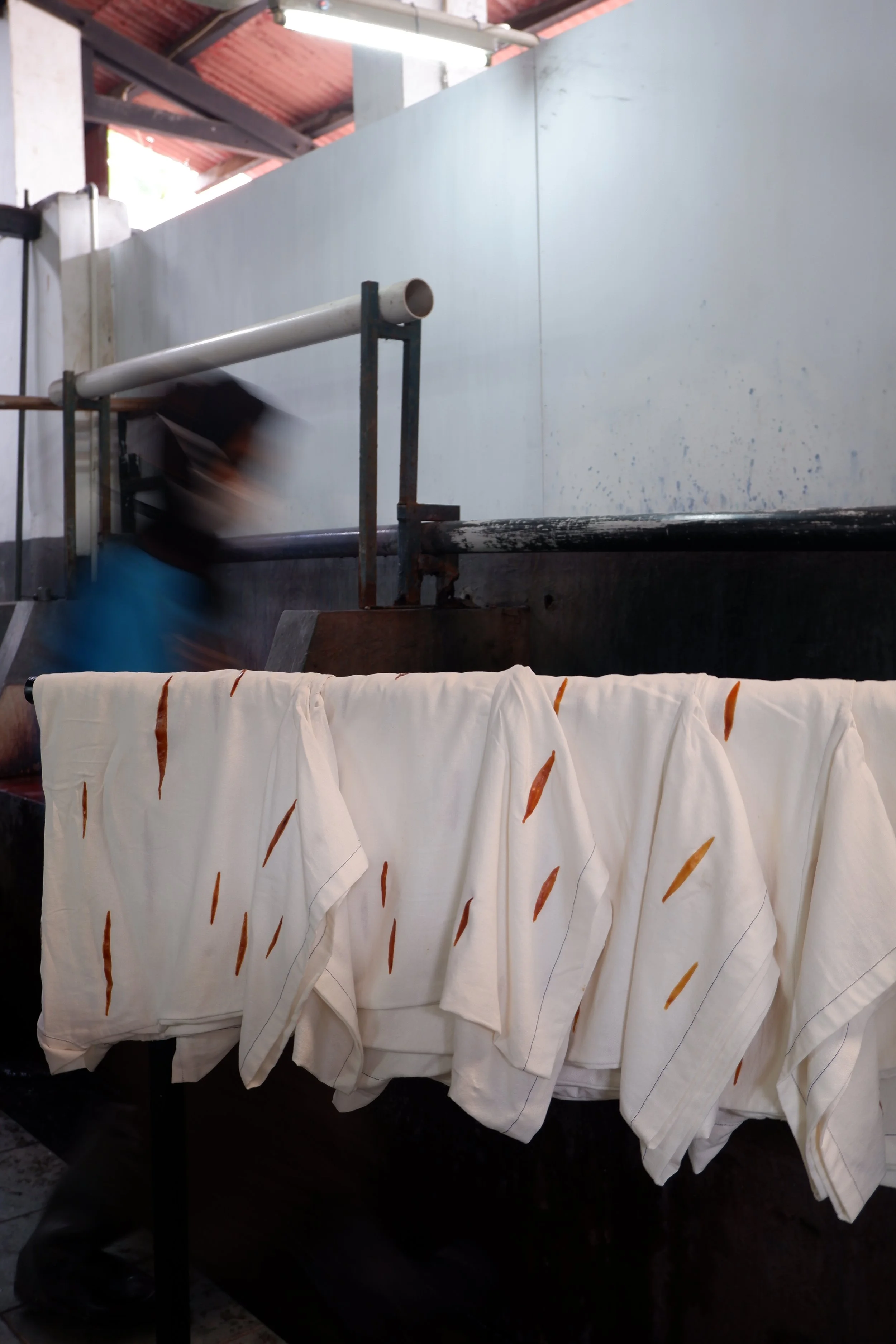
Medel is the stage where the fabric, already patterned with wax, is immersed in natural dye baths. The cloth is hand-dyed through multiple immersions—up to 25 times—to gradually build depth and richness of color. Each dip allows the dye to penetrate the fibers more fully, creating a layered and nuanced tone that cannot be achieved in a single process.
MEDEL (DYEING PROCESS).
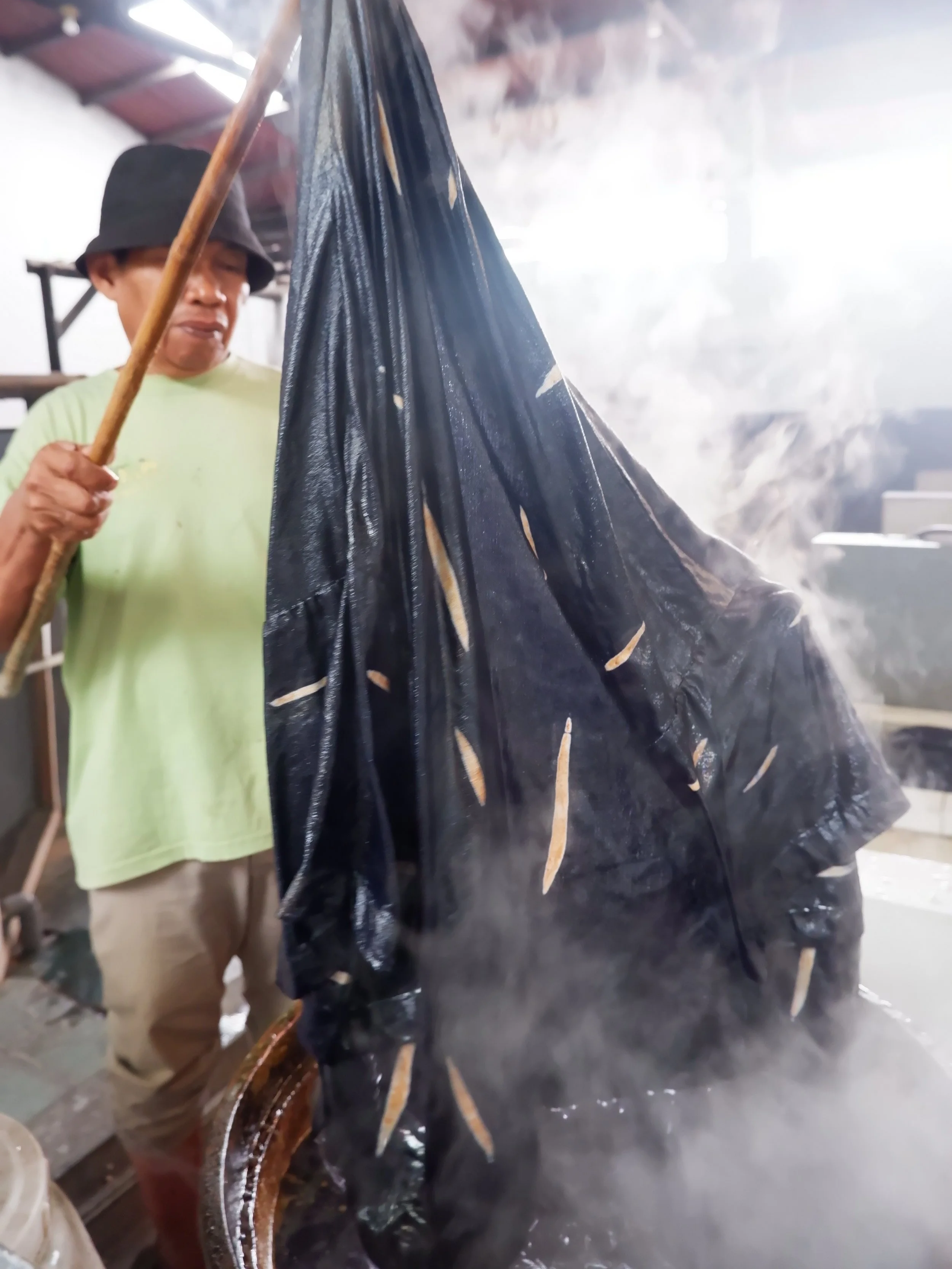
Nglorod is the final stage, where the wax is removed to reveal the batik motif. The fabric is boiled in hot water, allowing the wax to melt away and separate from the cloth. Once the wax is fully released, the fabric is rinsed with clean water and carefully dried, unveiling the intricate patterns in their full clarity.
NGLOROD (WAX REMOVAL).
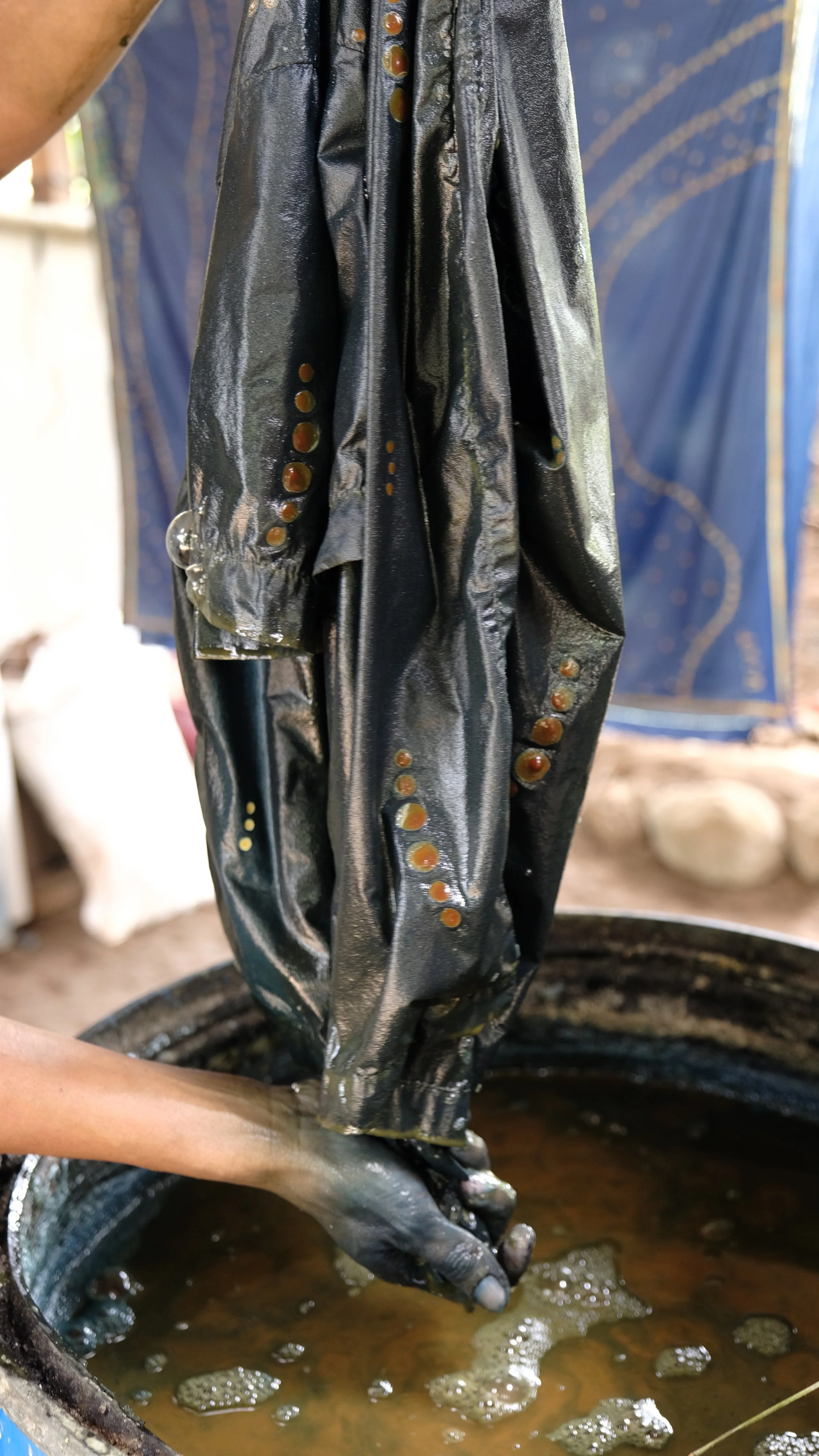
NATURAL DYEING.
A RESPONSIBILITY TO NATURE.
Choosing natural dyeing processes is our commitment not only to preserving heritage, but also to being responsible to the nature.
Using plant-based dyes is one of our sustainable way to creating environmentally friendly products that are gentle on the skin and kinder to nature. Natural dyes, often sourced from indigo, jolawe, tingi, secang, mango leaves, ketapang, and other plant sources.
Each piece is treated individually, going through a careful mordanting and dyeing process that allows the color to bind naturally to the fabric. To achieve depth, the cloth is immersed repeatedly, sometimes over 20 times, building layers of color slowly.